Dr. Emery
This post is opinion only. See full disclaimer below.
This paper is a preliminary release intended to advance my broader argument. Specific analysis; sources and references remain subject to revision and correction.
Introduction
The Efficient Market Hypothesis (EMH), articulated by Eugene Fama, has long served as the orthodox framework for understanding financial asset valuation including stocks, bonds, derivatives, currencies, real estate, crypto, and commodities. It assumes that prices transparently embody all available information and thus function as neutral signals of economic fundamentals [1]. In this view, valuation is conceived as a closed system of rational actors, where competition instantaneously dissolves mis-pricing and asset prices stand as purified reflections of earnings, interest rates, and supply and demand [2]. Any mis-pricing in this model will be quickly arbitraged away.
I propose the Macro-political Captured Assets Hypothesis (MCAH) as an alternative macro theory of asset prices. This model suggests that asset pricing is often instead at least partially the outcome of hidden flows, cartel coordination, and state power [3]. Laundered capital inflates real estate markets [4], covert sovereign funds shape commodities and debt [5], and political capture redefines valuation regimes across sectors [6]. In this perspective, price is not merely the index of risk and return but the inscription of power itself, structured by illicit finance and geopolitical maneuvering as much as by conventional open market behavior. For investors seeking alpha in the markets, the implication is clear: asset values must be read not as neutral mirrors of fundamentals but as terrains of power contestation where hidden forces continually redefine what counts as value.
Let me be clear right at the outset. I consider EMH to be an important and Nobel winning deserving theory, but I also strongly believe there are circumstances in which MCAH provides a more analytically sound framework for understanding asset valuation especially for actual investors. In fact EMH has been used too often by the investing community to justify a buy and hold model without any recognition of these key complicating factors. For the average investor in many more predictable markets and periods of market history this may even be preferable, but for investors seeking alpha in more volatile markets or at times of macro-political dominance such a theoretical approach can fail, alas, to consider the full picture regarding assets.
Drivers of Market Capture
Shadow Liquidity
Capital from illicit activities — narcotics, arms, counterfeit goods, and trade mis-invoicing among other categories— often flows into legitimate markets through channels such as real estate, small‑cap equities, offshore funds, and logistics networks [7].
Political Manipulation
Political elites frequently tolerate at least shorter term, exploit cartel networks for national security uses, or even in some cases illegitimately form tacit alliances that help illicit capital to thrive or maintain power.[8]
Hidden Political Power Machinations
Political elites can more directly capture economic structures and use them for their own political power purposes in ways that are in part hidden from public disclosure. Tariff and sanction evasion regimes, more hidden undeclared government capital flows directed to transnational actors, regulatory regimes that exceed normal mechanisms and are used to consolidate power or distribute assets to aligned nongovernmental parties, real politique great power machinations intended to control external regime leadership and economic policy behind the scenes, so to speak, can significantly effect asset pricing while remaining intentionally hidden in many cases below the surface.[9] Also, conventional economic models and many investors may simply miss the significance of such events since they concern power and not more normal economic processes.
Fear and Coercion
Coercion and violence may intimidate political leaders at national, regional or local levels. Captured political structures and party machines may in turn influence voter turnout, turn policy decisions in directions more favorable to criminal or corrupt activity or power calculations, and directly or indirectly influence capital flows into local economies, with ripple effects that extend into asset performance more generally.[10]
Political Support Against Existing Authority
Some political factions may even tolerate or actively encourage disorder when it serves their broader goal of undermining traditional authority, allowing cartel consolidation to persist longer than fundamentals alone would suggest or purposely creating situations conducive to more extreme market volatility. A classic example of this is the Neo-Marxist left’s in some historical and present day cases view of the lumpen-proletariat as a useful key revolutionary force. [11]
Fundamental Structural Change
Perhaps, most importantly, and this will be discussed further in later more complete notes, political power can fundamentally change even the very structure in which asset valuation occurs in profound and sometimes unexpected ways. Even without the presence of illicit capital or hidden activity such more extreme change can overthrow the very premises upon which asset valuation occurs and introduce potential alpha but only if that change is understood at a deeper level by investors. The idea that a market can efficiently price that which it lacks often for some time sufficient tools or perspective to understand is highly debatable. MCAH starting with an emphasis on power is much more likely to provide the heuristics for potentially coming to terms with such changes as they actually occur.
Case Studies
To suggest just a few of many possible case studies to consider the MCAH hypothesis:
Miami Real Estate (1980s)
During the 1980s, profits from the cocaine trade were funneled into Miami’s condominium market, driving property housing costs in many cases far above what local supply-demand relationships justified for valuations [12].
Housing Bubble Appreciation in the 2000s
There are those who have argued that the housing bubble was in part exacerbated by flows of illicit capital using the market as an ideal location to launder money. Some analysts have argued that the U.S. housing bubble of the mid-2000s was not only a product of reckless lending and inflated credit ratings, but also of shadow capital. Unger and Ferwerda (2011) suggest that illicit funds seeking safe havens in real estate contributed to unsustainable price inflation, effectively using housing markets as a laundering mechanism for dirty money. This perspective reframes the crisis as not merely financial mismanagement, but also a failure to regulate the intersection of capital markets and criminal finance. As Transparency International (2017) and Global Financial Integrity (2017) argue, real estate has long been a preferred vehicle for laundering illicit capital, with opaque inflows contributing to unsustainable housing price inflation. This complements the Financial Crisis Inquiry Commission’s (2011) findings on securitization and credit ratings, while Shaxson (2011) situates these flows within the broader system of shadow capital and offshore finance.[13]
Small‑Cap Hospitality Firms
Sudden, unexplained spikes in trading volume may potentially, it’s been suggested, signal laundering flows of capitol, particularly when in thinly traded equities [14].
Shipping & Commodities
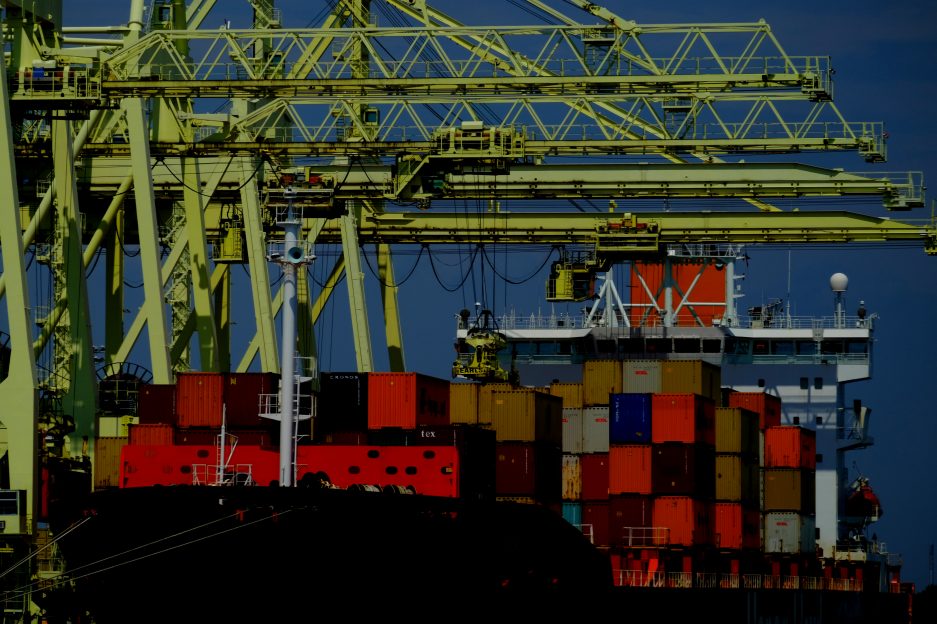
To bypass sanctions, networks of unregistered or re‑flagged vessels — often called “shadow fleets” — [15] often emerge during certain periods of history and especially during periods of warfare or the threat of conflict. These shadow fleets have the potential to disrupt normal shipping pricing mechanisms and they obviously in crucial ways redirect and influence broad global commodity flows including things like oil commodity pricing. This has been particularly the case in recent instances of sanction evasion by major countries who have actively empowered such evasion.
Also, commodities themselves, and I will have more to say on this in an upcoming note, often lend themselves to political capture or illicit activity.
PBR
The publicly owned but government majority shares held national oil company of Brazil constitutes a fascinating example of many aspects of the MCAH model. An investor in the asset relying on EMH would have been woefully unable to make sense of its many volatile stock moves over a long period. They would have missed the extensive illicit cash flows and hidden corruption tied to the company leading ultimately to a depreciation of share price and revealed ultimately by the Car Wash investigation that led to the impeachment of a sitting President of the country and imprisonment of a former President of the country.[16] They would have not predicted the extreme dividends paid by the company as a right wing President tried to decrease the economic reach of the company that has long, unlike in the US, been a power center of the left, and the effect of unexpected social pressure resulting from increased energy prices effect on asset value, or even the surprising resilience of PBR managerial leadership against hidden political pressure given the long technocratic tradition in the country dating back to the military junta era.
Authoritarian Regime Asset Takeover
Countless historical instances where authoritarian regimes on both the left and right have either captured control of key economic sectors or industries or outright expropriated such assets.[17] While once these changes have occurred necessary information may be readily available to investors and allow an efficient pricing mechanism this may not be the case prior to or even during the takeover. In those instances where the process has been rapid or involved key changes from one market model to another as, for example, in post-Cold War Eastern Europe, investors using the EMH model would have mis-priced asset values and missed the key causes of changes in market valuations.[18] The standard EMH model lacks the necessary emphasis on such mechanisms of economic capture and social change to predict changes in asset values whereas the MCAH model provides far superior predictive heuristics.
Investor Implications
Markets reflect not only fundamentals above the surface but also the influence of hidden power beneath the surface that are often unreported in the usual sources of economic indicators, data and market media. Investors who ignore these dynamics risk mispricing assets, failing to fully understand the actual reason in some cases for asset appreciation or depreciation, and underestimating the risk and volatility that can be caused by such elements, along with significant systemic vulnerabilities to the economic system both shorter and longer term.
Strategic Toolkit
Investors who want to fully understand markets thus must add the study of this deeper dimension to their investment and market analysis. Especially important in this regard is the macro-political study of the relationship between political power and illicit capital flows both in strategic alliance directly, at arms-length, ideologically and culturally, or in direct opposition. Often these capital flows and organizational structures become even a key lynchpin of conflict between political factions and elites and even in some cases are used tactically at the level of nation state competition and conflict. Also crucial is an ongoing consideration of how political power is being deployed to shape markets behind the scenes in ways obscured to much of the general public.
At a more immediate level reflective investors seeking alpha need to:
—Consider the possible behind the scenes role of shadow capital: This can include such things as monitoring real estate, logistics and indications of extent of penetration by criminal interests, small‑cap equities extreme appreciation, and commodities more broadly for divergences from expected outcomes.
—Review changes in real politique national machinations that have the potential to lead to extensive flows of capital kept at least partially hidden from the general public.
—Deeply consider political alliances: This includes attempting to identify where elites and illicit networks are forming alliances in some respect and where other elites are pushing back hard against such networks in practice. Here it is crucial to consider what real actions involve instead of merely political talking points. Recent left-right battles over criminal justice reform is a good example of such conflict and mobilization with the potential to effect urban economies. What are the potential implications for specific investments? Is government money flowing to criminal elements and how might this effect asset values?
—Assess manipulation and coercion risk: Factor in criminal and political violence and intimidation as variables in market stability or instability as the case may be. This can include everything from outright fear of reprisal by political or business leadership effecting policy decisions, corruption and bribery, direct street action, voter control or suppression in specific locales or nationally, fomented revolution by outside political forces or internal political factions, to the creation of cultural mechanisms of control producing a climate of fear of such coercion or tacit support of such activity. How, for example, does the media portray illicit activity? What are the likely policy implications of all this and what will the effect be on specific markets and investments? This can include both illicit cartel power but also more conventional political power deployed by elites in covert or more hidden ways.
—Study the political ideology in depth of the main political actors: Recognize when disorder and criminal activity is viewed by political actors as useful and therefore sustained in such frameworks and when its elimination and maintenance of order is a key concept. Are large macro trends emerging in terms of ideological change and how will they shape markets longer term? Are elites using power in more transparent ways or through more hidden channels to influence markets?
—Study the organizational structure and ideology of key illicit money actors and criminal organizations that have the potential to effect markets. What are these groups attitudes to markets, politics, willingness to use violence, risk of destabilizing existing institutions, etc. Do they see themselves as a key maintainer of order or as a revolutionary force against authority and which political factions are they likely to assist and resist? Do they maintain neutrality in political conflicts and competition? Do they have key international political allies or enemies? How do they view their role in broader economic markets? How will all of this effect market risk, specific asset values, and create potential volatility in assets?
–Especially important is the study of how major flows of illicit capital are potentially changing entire markets. Has a country’s leadership and economy been effectively captured by cartel or criminal interests, how much of an urban, region, or nation depends on illicit flows of capital for its GDP and standard of living, and does such activity lead to net-flows of capital into or out of the area? Do countries allow or even encourage such illicit capital flows into their territory from external sources while maintaining strict cartel controls internally? Are political leaders accommodating, neutral, or in conflict with such activity overall or do they plan to attempt to eliminate it entirely whatever the costs?
—To what degree is political power seeking rapid changes in control and capture of economic institutions and is the goal reform or direct and possibly corrupt behind the scenes power over markets for specific political or economic interests? Even more important regardless of issues of corruption, to what extent are elites or some process of social change whatever its particular ideology trying to fundamentally change the very structure of a particular society overall? How are such major changes caused by political power changing the nature and reality of asset valuation? It is during such periods of rapid structural change that both the greatest risk and highest potential alpha is found, but such periods require a perspective like that of MCAH not EMH to understand.
Conclusion
The Macro-political Captured Assets Hypothesis approach thus reframes investing. Markets may appear efficient, yet they remain subject to hidden power structures and the application of political power more broadly. Recognizing these forces is not just an academic exercise — it is essential for any investor seeking alpha and in general navigating risk in today’s global economy.
A next step theoretically would be to consider through a small n comparative method of the sort sometimes applied by political scientists to the study of areas like revolutions different examples of such captured markets in order to try to identify the key variables and indicators effecting asset prices. [19] At a broader level serious investors along with political economists would want to try to determine where the conventional EMH model best fits the actual markets and where MCAH is more applicable or what percentage of a given market is defined by each general perspective and how this changes over time. Also, the general direction of change. Is a specific market becoming more efficient or more captured and at what rate is this change occurring?
Footnotes
[1] Fama, E. F. (1970). Efficient capital markets: A review of theory and empirical work. The Journal of Finance, 25(2), 383–417. https://doi.org/10.2307/2325486
[2] Stigler, G. J. (1971). The theory of economic regulation. The Bell Journal of Economics and Management Science, 2(1), 3–21. https://doi.org/10.2307/3003160
[3] Kaufmann, D., & Vicente, P. C. (2011). Legal corruption. Economics & Politics, 23(2), 195–219. https://doi.org/10.1111/j.1468-0343.2010.00377.x
[4] Global Financial Integrity. (2017). Illicit financial flows to and from developing countries: 2005–2014. Washington, DC: Global Financial Integrity. Retrieved from https://gfintegrity.org
[5] Pozsar, Z., Adrian, T., Ashcraft, A., & Boesky, H. (2010). Shadow banking. Federal Reserve Bank of New York Staff Report No. 458. https://doi.org/10.2139/ssrn.1649542
[6] Hellman, J. S., Jones, G., & Kaufmann, D. (2000). Seize the state, seize the day: State capture, corruption, and influence in transition. World Bank Policy Research Working Paper No. 2444. https://doi.org/10.1596/1813-9450-2444
[7] Global Financial Integrity, Trade-Related Illicit Financial Flows in 134 Developing Countries: 2009–2018, Washington, DC, 2021
[8] Bagley, B. M. (2001). Globalization and the Latin American state. Annual Review of Sociology, 27, 143–165. https://doi.org/10.1146/annurev.soc.27.1.143. Beittel, J. S. (2023). Mexico: Organized crime and government. Congressional Research Service Report R41576. https://crsreports.congress.gov/product/pdf/R/R41576. Lessing, B. (2017). Making peace with the devil: State-building and the Colombian drug cartels. Harvard University Press.
[9] Perkins, J. (2004). Confessions of an economic hit man. Berrett-Koehler Publishers. George, S. (1988). A fate worse than debt. Grove Press. Klein, N. (2007). The shock doctrine: The rise of disaster capitalism. Metropolitan Books. Hudson, M. (2003). Super imperialism: The origin and fundamentals of U.S. world dominance (2nd ed.). Pluto Press. Kinzer, S. (2006)Overthrow: America’s century of regime change from Hawaii to Iraq. Times Books. Toussaint, E. (2006). The World Bank: A critical primer. Pluto Press.
[10] Banfield, E. C., & Wilson, J. Q. (1963). City politics. Harvard University Press.Bridges, A. (1997). Morning glories: Municipal reform in the Southwest. Princeton University Press.Shefter, M. (1994). Political parties and the state: The American historical experience. Princeton University Press.Riordon, W. L. (1994). Plunkitt of Tammany Hall. Bedford/St. Martin’s. Scott, J. C. (1972). Comparative political corruption. Prentice Hall.
[11] Cleaver, H. (1979). Reading Capital politically. University of Texas. Fanon, F. (1961). The wretched of the earth. Grove Press. Alvarez, A. M., & Rey Tristán, E. (Eds.). (2016). Revolutionary violence and the New Left: Transnational perspectives.Routledge.Kirn, G. (2022). The dangerous class: The concept of the lumpenproletariat. Pluto Press.
[12] United Nations Office on Drugs and Crime. (2011). Estimating illicit financial flows resulting from drug trafficking and other transnational organized crimes: Research commissioned by the UNODC. Vienna: UNODC. https://www.unodc.org/documents/data-and-analysis/tocta/10.Estimating_illicit_financial_flows_FINAL_web.pdf
[13] Global Financial Integrity. (2017). “Illicit Financial Flows to and from Developing Countries: 2005–2014.” Washington, DC: GFI, April 2017. Transparency International. (2017). “Doors Wide Open: Corruption and Real Estate in Four Key Markets.” Berlin: Transparency International, March 2017. Financial Crisis Inquiry Commission. (2011). The Financial Crisis Inquiry Report: Final Report of the National Commission on the Causes of the Financial and Economic Crisis in the United States. Washington, DC: U.S. Government Printing Office, January 2011. Shaxson, Nicholas. (2011). Treasure Islands: Tax Havens and the Men Who Stole the World. London: Bodley Head, 2011. Unger, B., & Ferwerda, J. (2011). Money laundering in the real estate sector: Suspicious property. Edward Elgar.
[14] Unger, B., & Walker, J. (2009). “Measuring global money laundering: ‘The Walker Gravity Model’.” Review of Law & Economics, 5(2), 821–838. https://doi.org/10.2202/1555-5879.1418
[15] Childs, N. (2025). Russia’s Shadow Fleet and Sanctions Evasion: What Is To Be Done? International Institute for Strategic Studies. https://www.iiss.org/research-paper/2025/01/russias-shadow-fleet-and-sanctions-evasion/
[16] Pontes, J., & Anselmo, M. (2022). Operation Car Wash: Brazil’s Institutionalized Crime and The Inside Story of the Biggest Corruption Scandal in History. Bloomsbury Academic.
[17] Bucheli, M., & Decker, S. (2021). Expropriations of foreign property and political alliances: A business historical approach. Enterprise & Society, 22(1), 1–30. https://doi.org/10.1017/eso.2019.45. Albertus, M., & Menaldo, V. (2012). If you’re against them, you’re with us: The effect of expropriation on autocratic survival. Comparative Political Studies, 45(8), 973–1003. https://doi.org/10.1177/0010414011428593. James, H. (2001). The Deutsche Bank and the Nazi economic war against the Jews. Cambridge University Press. Dean, M. (2008). Robbing the Jews: The confiscation of Jewish property in the Holocaust, 1933–1945. Cambridge University Press. United States Holocaust Memorial Museum. (2003). Confiscation of Jewish property in Europe, 1933–1945: New sources and perspectives. Center for Advanced Holocaust Studies.
[18] Sakwa, R. (2008). Putin: Russia’s choice. Routledge. Mungiu-Pippidi, A. (2015). The quest for good governance: How societies develop control of corruption. Cambridge University Press.
[19] Moore, B. (1966). Social origins of dictatorship and democracy: Lord and peasant in the making of the modern world. Beacon Press. Skocpol, T. (1979). States and social revolutions: A comparative analysis of France, Russia, and China. Cambridge, UK: Cambridge University Press.
Disclaimer:
The content on this blog is provided for informational, educational, and entertainment purposes only. It represents the author’s personal opinions and should not be construed as financial, legal, or tax advice.
By using this blog you agree that:
–You assume full responsibility for any outcomes resulting from the use of this content.
–You are solely responsible for all investment decisions and any gains or losses you incur.
–Past performance is not indicative of future results.
Any discussion of specific securities, sectors, or strategies is offered strictly for educational purposes and does not constitute a recommendation to buy, sell, or hold any investment. You should always:
Consult a qualified professional before making any financial decisions.
Consider multiple viewpoints and counterarguments.
Conduct your own research
I do not collect analytics or advertising data; any such information is gathered and processed by WordPress (including Jetpack) and Blaze Advertising under their own policies.